Choose water containers you can fill, move, and use
A water plan needs more than an empty jug. Think through where the water will come from, where it will sit, and how everyone in your household will get it out.
Start with a safe supply
CDC identifies unopened commercially bottled water as the most reliable emergency source. Its baseline is at least one gallon per person per day for three days, with more for some households and conditions. If possible, it suggests preparing a longer supply. Follow the linked CDC guidance and local public-health instructions for your situation.
Decide what each container needs to do
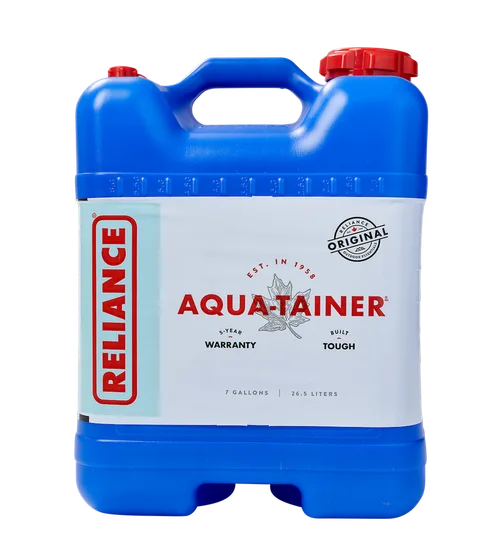
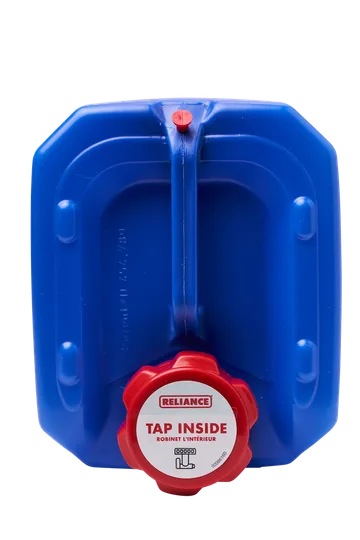
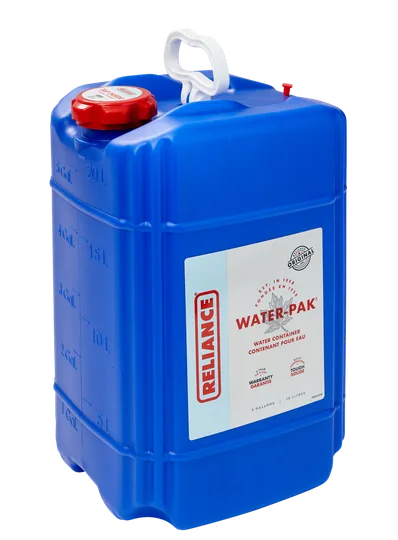
A spigot is convenient for dispensing from a stable surface. A pouring spout may work better for carrying water to another container. A collapsible carrier saves room when empty, while a rigid jug gives the walls more protection. None of the empty storage containers in this catalog filters or disinfects water.
Check the weight before choosing the largest size
One US gallon of water weighs about 8.34 pounds, before the container. Five gallons is roughly 42 pounds of water; seven gallons is about 58 pounds. A handle does not make that load easy for everyone. Two smaller containers may be easier to move than one large one. Choose an arrangement you can fill and use safely.
Read the stacking instructions for the exact model
Similar-looking containers can have different limits. For example, Reliance describes the Aqua-Tainer as stackable when empty, while its Aqua-Stack has a specified filled stacking limit. Keep the current instructions with your storage plan, use a stable supporting surface, and keep access to the dispenser clear. Compare water-container formats.
Keep storage and treatment separate
Use a container intended for drinking-water storage, follow its cleaning instructions, and label what you put inside. Filling an ordinary jug does not make unsafe water safe. If a supply is contaminated, follow official water-safety instructions rather than guessing from appearance or smell. Never reuse a container that held toxic chemicals.
Include the rest of the household
Remember food preparation, pets, and any other needs identified in your plan. Pick an accessible storage location and review the manufacturer’s maintenance instructions periodically. Choose food that fits your water and preparation plan.
Sources & further reading
- CDC: creating and storing an emergency water supply ↗
- Reliance Outdoors: container use and maintenance questions ↗
Numerical examples and default device values are illustrative unless explicitly described as a measurement. Consult the manuals for your own equipment.
Choose supplies that fit your household.
Compare package details, preparation needs, and practical storage.
Browse water containers