Emergency food you can actually use in an outage
The useful food supply is the one you can prepare, serve, and enjoy with the water and equipment you have. Start with a few ordinary meals, then fill the gaps.
Keep the first meal simple
Start with familiar shelf-stable foods that need little preparation. Ready-to-eat canned food, crackers, nut butter, and food your household already enjoys can be part of the plan. Keep any needed manual can opener and utensils beside them. A specialty food bucket is one option, rather than a prerequisite. See ready-to-eat catalog options.
Match the food to your kitchen during an outage
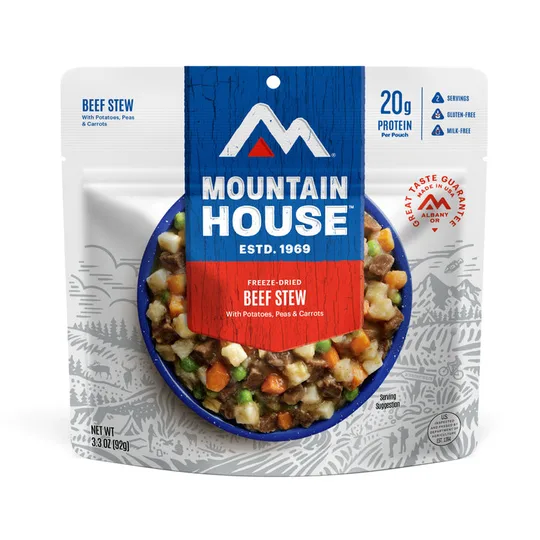
Sort your choices into food you can eat immediately, food you can mix with safe cold water, and food that needs hot water or cooking. Freeze-dried meal pouches can be convenient, but read the exact recipe directions. Buying a pouch does not give you a way to heat water. Never bring outdoor cooking equipment indoors to prepare an emergency meal.
Count meals and calories, not just servings
A serving is a label portion. It may be smaller than the meal you want, and a snack portion is not interchangeable with a dinner. As one example, the ReadyWise 120 Serving Emergency Food Supply lists 24,540 calories for the whole bucket and about 120 cups of preparation water. Compare a package’s actual nutrition panel with your household’s planned meals; do not assume that the serving count gives you days of complete nutrition. Compare package details side by side.
Try a meal before you buy the case
Choose a small pack and prepare it on an ordinary day. Check the portion, texture, flavor, water use, waiting time, and utensils. Include the people who will eat it. Keep the current ingredient and allergen statements in mind, especially when an assortment contains several recipes or permits substitutions.
Store food so it remains useful
Follow the package’s storage and date instructions. An unopened storage claim does not tell you how long opened food or prepared leftovers will keep. Keep the packaging intact, check supplies periodically, and rotate the foods you use in everyday meals. The current label is the reference for your exact recipe and production batch.
Make room for water
Some food supplies use substantial water before they reach the plate. Read each recipe and add that preparation water to your household plan. A ready-to-eat option is useful when you want to avoid using water for that meal. Plan stored water alongside your food.
Sources & further reading
- Illinois Emergency Management: food for an emergency ↗
- Mountain House: meal preparation and storage questions ↗
- ReadyWise: 120 Serving Emergency Food Supply contents and calories ↗
- FoodSafety.gov: food safety in an emergency ↗
- CDC: carbon monoxide and portable generators ↗
Numerical examples and default device values are illustrative unless explicitly described as a measurement. Consult the manuals for your own equipment.
Choose supplies that fit your household.
Compare package details, preparation needs, and practical storage.
Browse emergency food